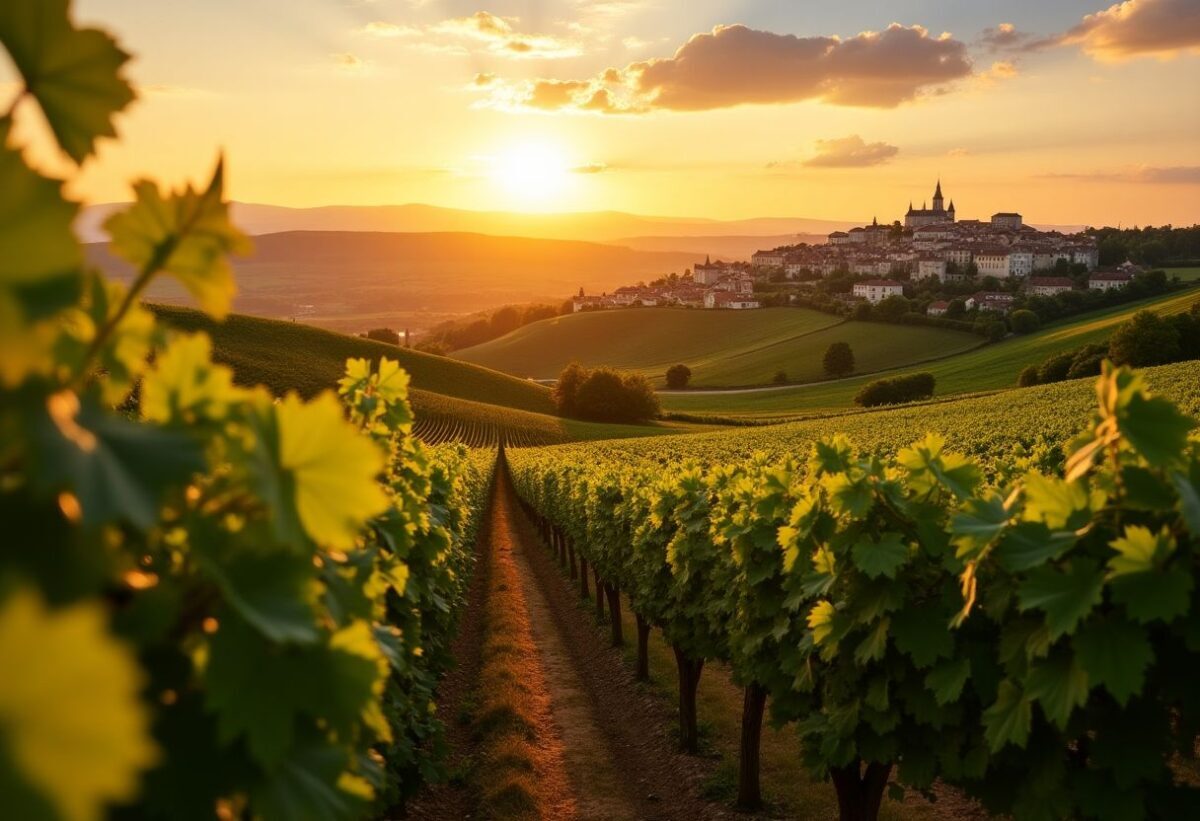
Burgundy, a French region synonymous with elegance and refinement, embodies a diversity of terroirs that excites wine lovers around the world. Known for its exceptional red wines, this region offers a palette of flavors ranging from delicate red fruit notes to the more robust aromas of underbrush and truffle. Burgundy’s red wines, primarily made from the Pinot Noir grape, charm with their finesse and aromatic complexity. Each sip of this nectar transports us on a sensory journey through the rolling hills and picturesque villages of this prestigious wine region.
Let yourself be captivated by the timeless charm and cultural richness of Burgundy’s red wines.
The history and terroir of Burgundy
Burgundy is a land where history and geography intertwine to create wines of unparalleled quality. The winemaking history of this region dates back to Roman times, when the first vines were planted.
The Burgundy terroir is divided into several sub-regions, each benefiting from unique geological and climatic characteristics:
- Côte de Nuits: This territory is famous for its powerful and structured red wines, home to some of the greatest Burgundy crus.
- Côte de Beaune: Known for its red wines with fresh red fruit aromas, it offers elegant and charming crus.
- Côte Chalonnaise: Less known, it offers wines with a good quality-price ratio, combining finesse and accessibility.
The diversity of soils, ranging from limestone marl to clay, as well as climatic variations, play a crucial role in the production of wines with distinct aromatic profiles.
The characteristics of Pinot Noir
Pinot Noir is the emblematic grape variety of Burgundy’s red wines, recognized for its ability to subtly express the nuances of the terroir. This delicate grape variety, sensitive to climatic conditions, poses a true challenge for winemakers.
Wines made from Pinot Noir stand out with specific characteristics:
- Aromatic: Aromas of red fruits such as cherry, raspberry, and strawberry dominate, often accompanied by delicate floral notes.
- Evolution: With age, Pinot Noir wines develop more complex aromas of leather, underbrush, and truffle.
- Structure: On the palate, they reveal a silky texture, with well-balanced acidity and soft tannins.
Each vintage brings its share of surprises, making each bottle unique and precious.
Food and wine pairings with Burgundy red wine
Pairing a Burgundy red wine with a dish can transform an ordinary dinner into a memorable gastronomic experience. Thanks to their structure and complexity, Burgundy’s red wines pair wonderfully with a variety of dishes.
Some essential pairings:
- Red meats: A beef bourguignon or a leg of lamb will highlight the richness of the great crus.
- Poultry: The fruity and spicy notes of the wine harmoniously complement roasted duck or stuffed turkey.
- Cheeses: Opt for an Époisses or a Comté, which will support the subtle nuances of the wine.
To enhance these pairings, it is interesting to play with contrasts and aromatic harmonies, creating a symphony of flavors.
The choice and storage of Burgundy red wine
Choosing the right bottle of Burgundy red wine requires particular attention to details such as the vintage, the producer, and the sub-region. Wine enthusiasts should consider several factors to ensure they select the wine that meets their taste expectations.
Some tips for making the right choice:
- Vintage: Years with optimal climatic conditions produce wines of exceptional quality; therefore, it is wise to inquire about good vintages.
- Producer: The reputation and expertise of the wineries play a crucial role in the quality of the bottles.
- Sub-region: Each sub-region offers different aromatic profiles, ranging from light wines to more robust crus.
It is equally important to store the wine properly, ensuring that an adequate temperature and humidity are maintained to preserve all the organoleptic qualities of the precious nectar.