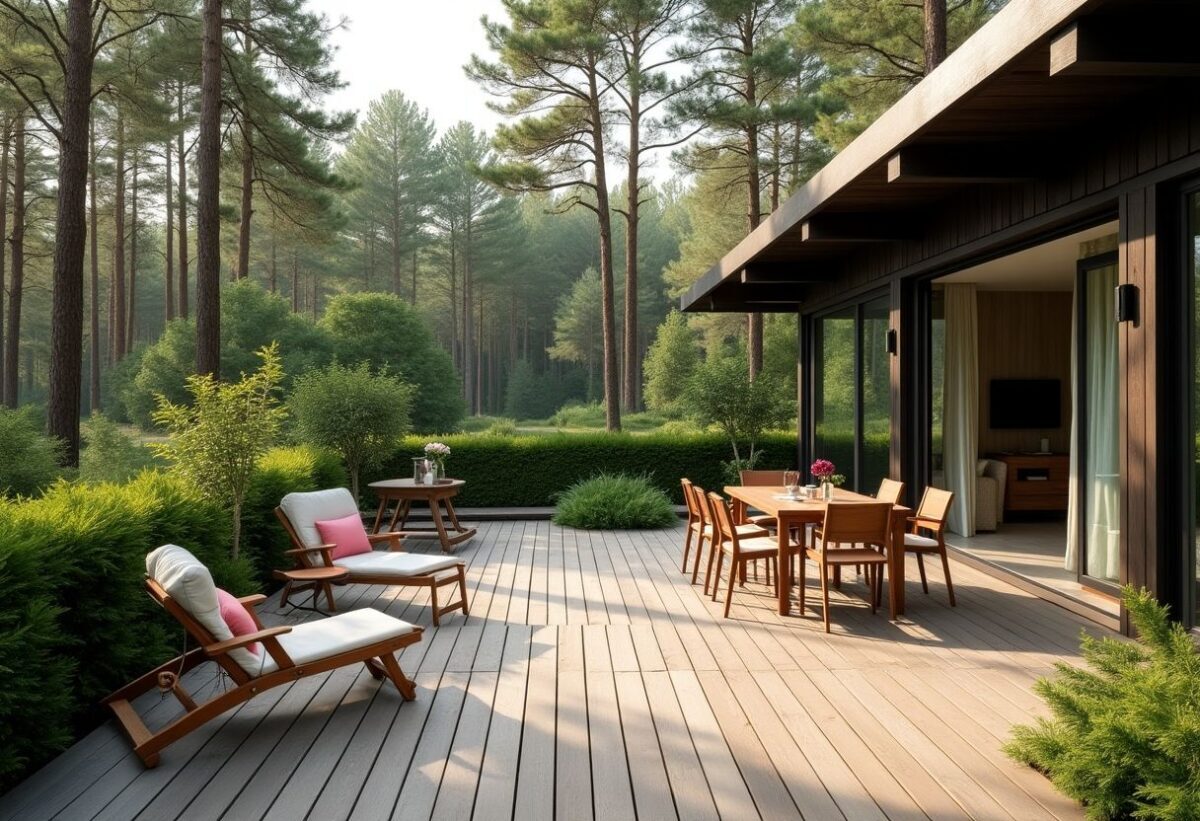
Located in the southwest of France, the Landes region is renowned for its vast pine forests and breathtaking coastline. It is here that the art of living truly comes to life, where the wooden terrace becomes a natural extension of the home, a place of conviviality and relaxation in the heart of nature. In an environment where wood is omnipresent, the inhabitants of the Landes have managed to harness this resource to create outdoor spaces that are both aesthetic and functional. Whether it’s to enjoy a coffee in the morning while listening to the birds sing, or to share a meal with friends under the starry sky, a wooden terrace in the Landes is much more than just an outdoor arrangement: it’s a way of life.
By choosing wood as the preferred material, one opts for a natural and warm aesthetic that harmoniously integrates into the local environment. But how to create a wooden terrace in the Landes that is both durable and attractive?
The preferred types of wood in the Landes
The choice of wood is crucial in designing a terrace, especially when one wishes to respect the natural setting of the Landes. Different species are appreciated for their resistance and beauty.
- Maritime pine: The quintessential local species, maritime pine is often treated to withstand the elements and insects. Its light hue and pronounced grain make it a popular choice.
- Douglas fir: This wood, known for its robustness, is commonly used in terrace construction. Its rosy color adds a warm and elegant touch.
- Oak: Valued for its durability, oak offers a refined aesthetic ideal for high-end projects.
- Exotic woods: Although less common, woods such as ipe or cumaru are also used, offering great resistance and an intense color.
Construction and installation of a wooden terrace
Building a wooden terrace requires particular expertise. Each step must be carried out with care to ensure the durability and beauty of the project.
The first step involves preparing the ground, which is essential to ensure the stability of the structure. Next, the installation of the joists determines the base on which the wooden planks will be fixed. It is essential to respect the spacing to prevent the wood from warping. The choice of fasteners is also crucial for the longevity of your terrace. Finally, applying a protective finish helps preserve the wood’s aesthetic against natural elements.
Maintenance for maximum durability
A wooden terrace, to maintain its shine and robustness, requires regular maintenance. This is not a burden but a way to extend the life of your installation.
- Periodic washing: Cleaning your terrace with a soft brush and suitable soap removes accumulated dirt.
- Annual treatment: Applying oil or a saturator protects the wood from moisture and UV rays.
- Repairs: Immediately replacing damaged planks prevents the worsening of cracks or splinters.
Aesthetic and ecological benefits
A well-designed wooden terrace in the Landes is not limited to a utilitarian function. It transforms your outdoor living space while respecting the environment.
- Natural integration: Wood harmonizes with the surrounding vegetation, creating a serene outdoor living space.
- Ecological material: Choosing PEFC or FSC certified wood ensures responsible forest management.
- Added value: A well-designed wooden terrace could increase the value of your property, thanks to its aesthetics and functionality.
- Comfort and well-being: Wood offers a feeling of warmth and comfort that enriches the outdoor living experience.