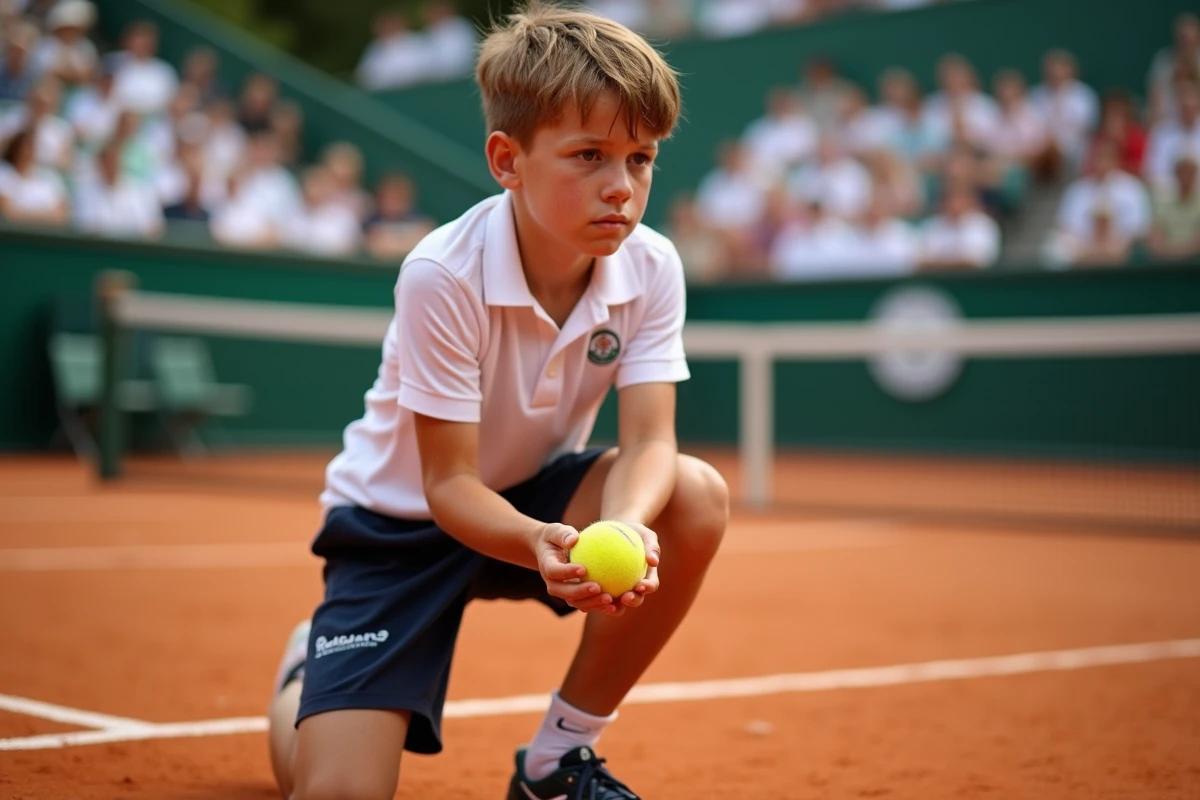
Every year, the Roland Garros tournament mobilizes several dozen young ball boys and girls on the Parisian clay. Their presence is part of the scenery, just like the baseline rallies and the stands of the Philippe-Chatrier. However, the question of their remuneration arises at each edition, fueled by rumors and misconceptions circulating on social media.
Ball Boys and Girls at Roland Garros: A Status That Is Not That of an Employee
The term “salary” applied to ball boys and girls is misleading. These young individuals, often minors, do not sign a work contract with the French Tennis Federation. Their status is closer to that of a supervised volunteer, with a flat-rate compensation covering the duration of the tournament.
This distinction changes everything. A compensated volunteer does not receive a payslip, social security contributions, or unemployment rights. The actual remuneration remains modest compared to the time invested. The ball boys and girls are present on-site for the entire fortnight, sometimes starting from the qualifiers, which represents a heavy physical and logistical commitment for adolescents still in school.
To better understand how much a ball boy or girl earns at Roland Garros, one must first accept that the word “earn” does not cover the same reality as for a traditional job. The compensation provided mainly covers the expenses related to daily presence on-site: meals, transportation, equipment provided by the tournament.
Selection and Physical Training of Tournament Ball Boys and Girls

The selection of ball boys and girls begins several months before the first week of the tournament. Candidates, usually licensed at tennis clubs in Île-de-France, go through a multi-step process that evaluates their physical condition, responsiveness, and ability to adhere to a specific protocol.
The selection process resembles a demanding recruitment:
- Agility and speed tests, as a ball boy or girl must cover their area in a few seconds without disrupting the game
- Situational assessments on court, where placement quality and discretion are evaluated by experienced supervisors
- An interview focusing on motivation and availability throughout the tournament, including qualifiers
Only a fraction of the candidates secures a position. Competition is fierce every year, and some young individuals try their luck several times before being selected. The physical demands partly explain why the age group remains concentrated around adolescence: one must be quick, enduring, and able to stay crouched or in a low position for hours.
What the Tournament Offers Beyond Compensation
Reducing the experience to a question of money overlooks what truly motivates the candidates. Access to the behind-the-scenes of a Grand Slam tournament is the real reward. Ball boys and girls are close to the best players on the circuit, observe matches from the court, and experience an immersion that thousands of tennis enthusiasts envy.
The tournament provides complete equipment: official outfit, shoes, bag. These items are kept by the ball boys and girls at the end of the fortnight. For many, the Roland Garros outfit becomes a source of pride, a tangible proof of their participation.
The experience also plays a role in personal development. Several former ball boys and girls have testified that this first encounter with a structured professional environment, where rigor and service are non-negotiable, has been beneficial for their future. Some find it a gateway to careers related to sports, events, or coaching.
Ball Boys and Girls and Partner Companies: Who Finances What
The financial operation of the ball boy and girl program is not entirely transparent. The French Tennis Federation manages the organization, but partner companies of the tournament contribute to the funding of the system. Jersey sponsors, equipment suppliers, logistical partners: several players contribute without the exact cost distribution being made public.
This opacity fuels speculation. Some believe that the revenues generated by the tournament, from ticket sales and television rights, would justify better compensation. Others argue that the educational nature and prestige of the mission more than compensate for the low amount received.
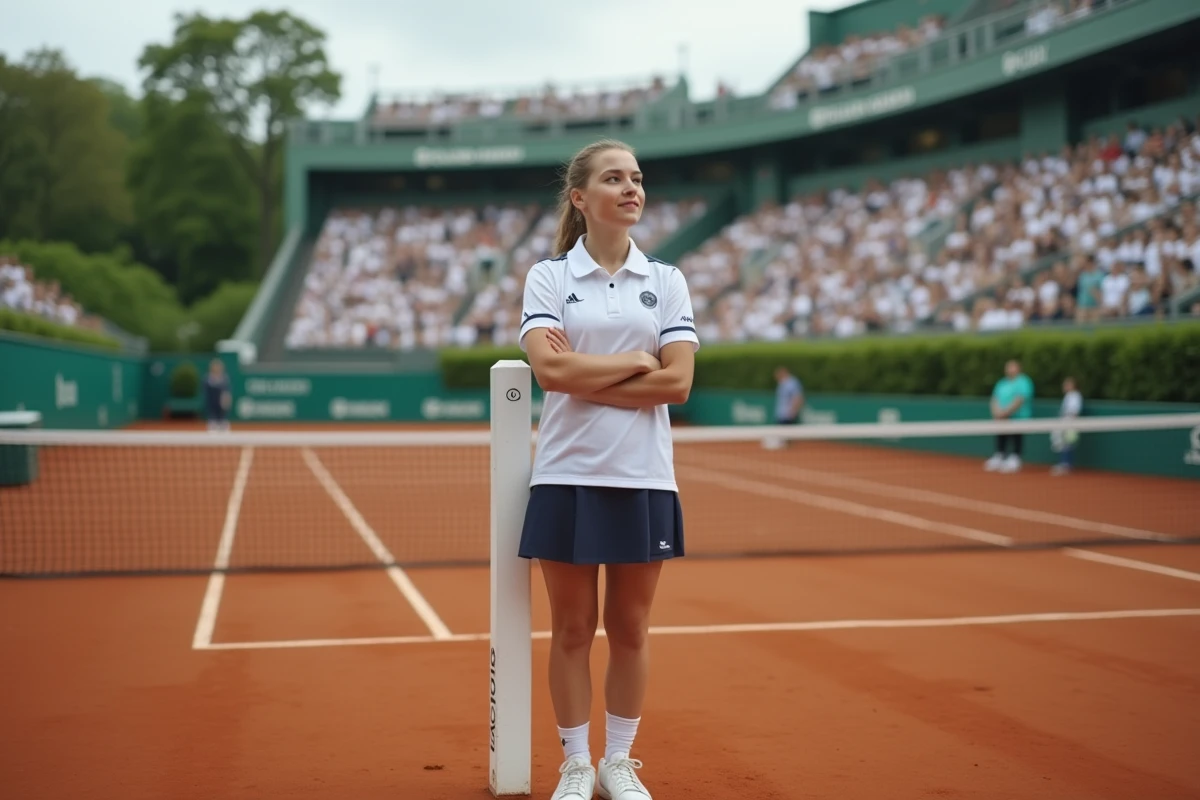
The available data does not allow for a precise resolution of this debate. The Federation does not disclose the exact amount of the compensation, and the figures circulating online vary by source. What seems established is that the compensation barely covers the actual expenses incurred by families (daily travel, availability of a parent accompanying minors).
Comparison with Other Tennis Tournaments
Roland Garros is not the only Grand Slam that employs young ball boys and girls. Wimbledon, the Australian Open, and the US Open each have their own selection and compensation systems. Practices vary from tournament to tournament, but the principle remains similar: a symbolic compensation rather than a salary.
- At Wimbledon, ball boys and girls are selected from partner schools in south London, with a training program that spans several months
- The Australian Open recruits from local clubs in Melbourne and offers supervision comparable to that of Roland Garros
- The US Open, in New York, mobilizes volunteers from the metropolitan area with a system similar to supervised volunteering
No Grand Slam pays its ball boys and girls at the level of a job. The model relies everywhere on the prestige of participation and the experience gained, not on a salary logic.
The reason for this uniformity lies in the very nature of the role. Ball boys and girls are not service providers in the legal sense. Their mission remains framed as an educational and sports activity, which allows organizers not to apply the salary scales in effect for tournament employees.
The myth of the well-paid ball boy or girl persists because it is appealing. The reality on the ground is more prosaic: modest compensation, real physical commitment, and a human experience that most former ball boys and girls describe as impactful. For families hesitant to enroll an adolescent, the financial question should weigh less than the quality of the experience offered and the young person’s ability to keep up with the pace of a fortnight on the Parisian clay.