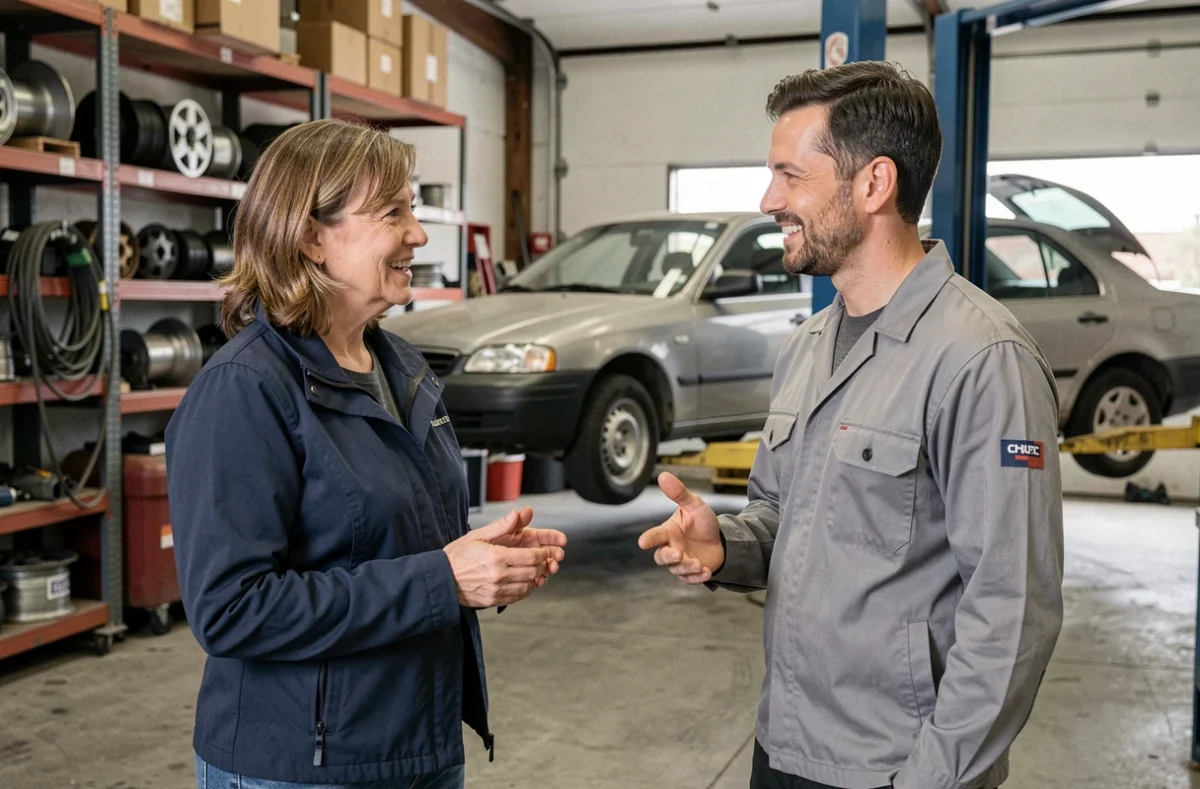
A solidarity garage is not limited to offering cheap repairs. Some of these structures refurbish vehicles donated by individuals and then sell them at a reduced price to people facing mobility difficulties. Understanding this refurbishment circuit, its real costs, and its limitations allows us to assess whether this sector constitutes a credible alternative for accessing a reliable car.
Reuse rate and actual capacity of the solidarity garage network
The Solidarauto network, which includes eight garages in France, receives each year more than 1,500 vehicles donated by individuals. Of this volume, about 40% are reused after refurbishment. The rest goes for spare parts or recycling, due to technical or economic unfeasibility.
This ratio means that approximately 600 vehicles per year reintegrate the solidarity sales circuit through this single network. Compared to the more than 5,000 people supported each year by Solidarauto, the supply of refurbished cars remains limited relative to demand.
| Indicator | Solidarauto Data |
|---|---|
| Garages in the network | 8 |
| Vehicles donated per year | More than 1,500 |
| Reuse rate after refurbishment | 40% |
| People supported per year | More than 5,000 |
These figures show that the model relies as much on the donation of vehicles as on the technical capacity to bring them back into circulation. A solidarity garage that lacks mechanics or parts will see its reuse rate drop.
Solidarity vehicle: purchase or rental, two distinct circuits
Buying a refurbished vehicle is not the only option. Several structures also offer short or medium-term rentals, with rates adapted to the beneficiary’s situation. By browsing the cars from Your Solidarity Garage, we see that the catalogs vary according to local arrivals and donations received.
A documented scheme in Indre-et-Loire, for example, displays a solidarity rate of 7 euros per day, compared to double the ordinary rate. This type of rental is suitable for someone who is returning to work and needs a vehicle immediately, without mobilizing several hundred euros for a purchase.
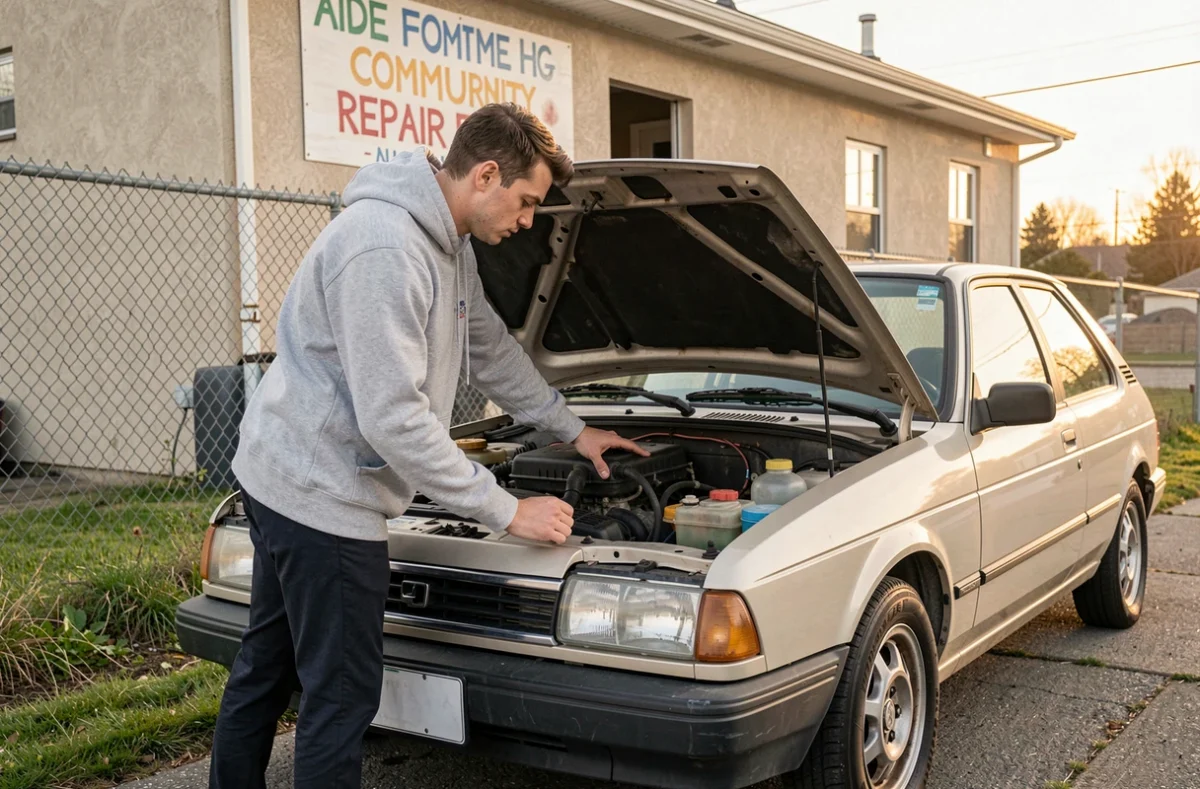
On the other hand, purchasing remains relevant when mobility is a lasting need. The price of a refurbished vehicle in a solidarity garage is significantly below the traditional used car market, but it depends on the condition of the initial donation and the extent of the repairs carried out.
- Solidarity rental is suitable for a temporary need (returning to work, training, trial period) and requires a low daily budget.
- Buying a refurbished vehicle is aimed at those who need a car for several months, with a higher initial investment but no monthly cost.
- Access conditions (income ceiling, referral by a social worker) vary from one structure to another and are not standardized at the national level.
Financing a solidarity vehicle: cumulative aids and their limits
Buying a refurbished car at a reduced price is not always sufficient. The overall cost includes insurance, fuel, and regular maintenance. Several schemes can be combined to reduce the total bill.
Some CAFs offer interest-free mobility loans, presented as honor loans. France Travail can also contribute to the financing of travel related to returning to work, training, or a job interview. These aids are not national: their allocation criteria depend on the local CAF and available budgets.
A common pitfall is to neglect the technical inspection. A vehicle purchased from a solidarity garage typically passes this inspection before sale, but the buyer must check the remaining validity date. An expired technical inspection a few weeks after purchase generates an unexpected expense that can reach several dozen euros, not to mention any potential re-inspections.
Points to check before purchasing a solidarity vehicle
- Request the complete technical inspection report and ensure that no major failures are listed.
- Ensure that the annual contribution to the association garage (generally between 10 and 150 euros) is included in the projected budget.
- Confirm with the structure whether post-purchase mechanical follow-up is offered, as some solidarity garages provide technical support for several months after the sale.
Solidarity garage and regular maintenance: measurable savings over time
Access to a reliable vehicle does not stop at purchase. Solidarity garages also help reduce regular maintenance costs compared to a traditional garage.
The principle of the participatory garage relies on the owner’s involvement. Supervised by a professional mechanic, they perform certain operations themselves (oil change, brake pad replacement, filter replacement). This format reduces labor costs, which represent the largest portion of an auto repair bill.

This model has a structural limit: the number of solidarity garages in France remains between 150 and 200 structures. Territorial coverage is uneven, concentrated in certain urban areas and almost absent in isolated rural areas, where the need for individual mobility is greatest.
For a modest household that combines the purchase of a refurbished vehicle and maintenance at a solidarity garage, the annual automotive budget can decrease significantly. The condition remains to be located within the geographical perimeter of one of these structures and to meet the eligibility criteria, which often involve a referral from a social worker or an institutional prescriber.