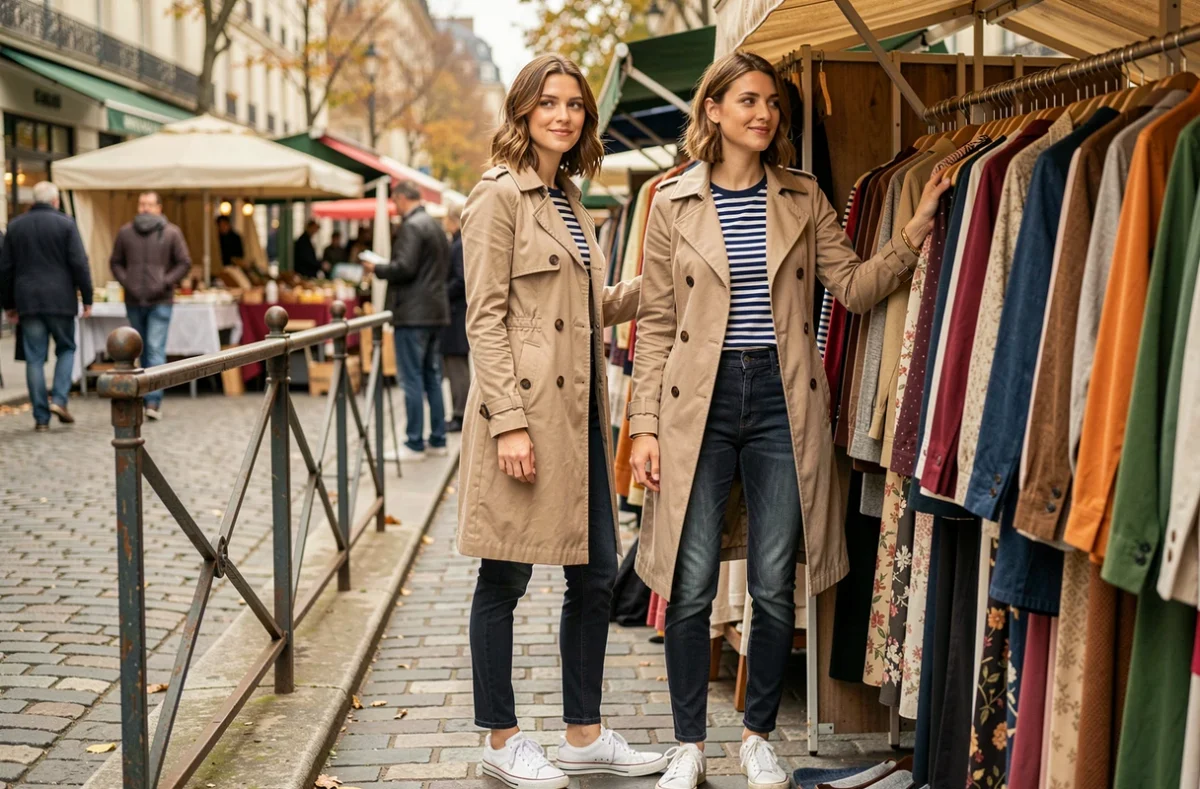
The chic Parisian style is based on a small number of precise dressing rules, much more than on a high budget. Understanding these rules allows you to create elegant outfits with accessible pieces, including second-hand items. Here are the trendy fashion tips that make the difference between an ordinary look and a mastered Parisian style.
Second-hand and Parisian style: the shopping circuit changes the price
Have you ever noticed that two identical jackets can cost double depending on where you buy them second-hand? According to Refashion data shared by TF1 Info, solidarity shops have average prices lower than peer-to-peer platforms. Second-hand corners integrated into brand boutiques fall somewhere in between.
To build a Parisian wardrobe on a budget, the choice of channel is as important as the choice of pieces. An Emmaüs thrift store or a local recycling center often offers blazers, cotton shirts, and leather bags at a fraction of the price displayed on resale apps.
The fastest-growing segment in France remains resale in brand boutiques. The selection is curated, often ironed, and easier to browse than searching among individuals. This makes it easier when looking for a specific cut or material. Several practical tips on this topic are detailed in the fashion section of Paris Astuce, which regularly discusses the accessibility of the Parisian wardrobe.
Neutral colors and high-rotation pieces: building a Parisian wardrobe
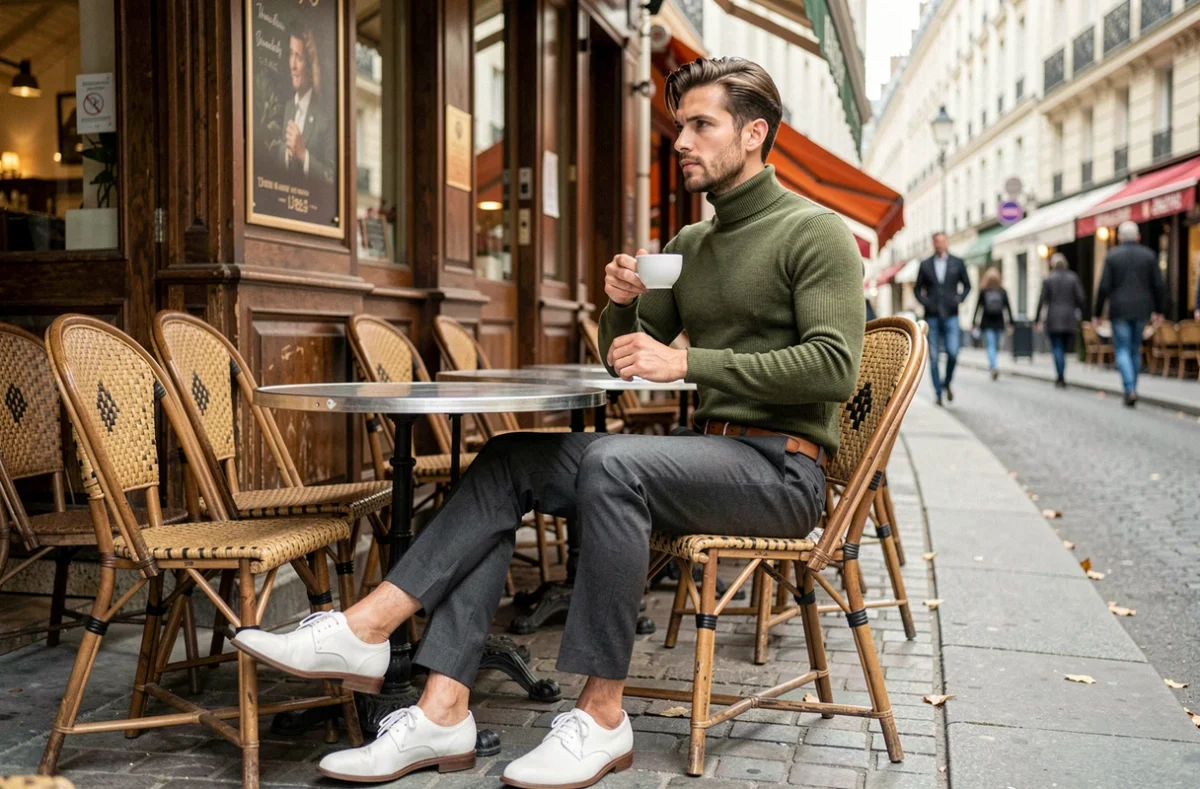
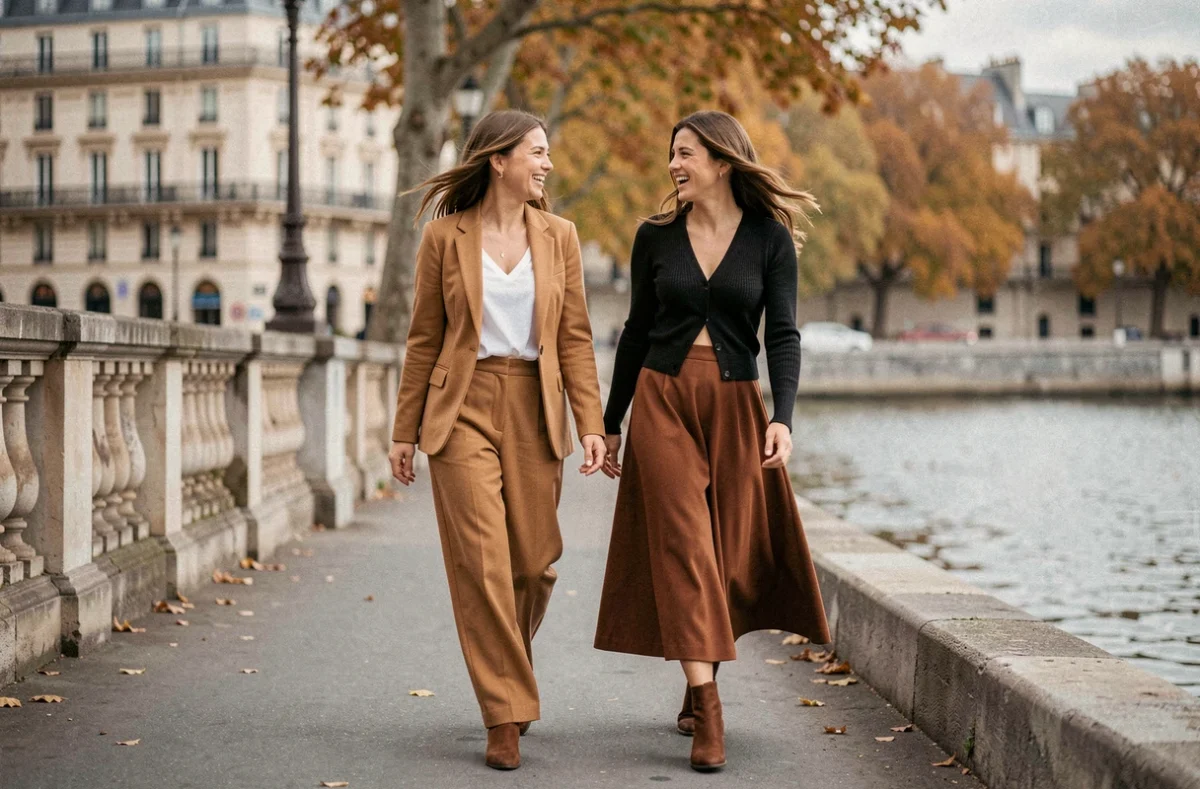
The foundation of a Parisian wardrobe consists of a few colors: black, navy, off-white, beige, and heather gray. It’s not a matter of personal taste; it’s a principle of combinatorial design. Five neutral colors multiply the possible combinations between your pieces.
With a raw denim, a navy blazer, and a white t-shirt, you already have a look that works from the office to the restaurant. Add a pair of ballet flats or loafers, and the outfit stands on its own.
The most frequently recurring pieces
- The slightly oversized straight blazer, in wool or thick cotton, worn over both jeans and a midi dress. It’s the piece that transforms a basic outfit into a structured one.
- The raw or faded straight-cut jeans, neither too slim nor too wide. The straight cut transcends seasons without looking dated.
- The white poplin or linen shirt, tucked halfway into the pants. This gesture of “calculated negligence” gives the impression of a natural look.
- The medium-sized structured leather bag in a neutral tone. It anchors the silhouette and replaces several bags for different uses.
Each piece should be able to pair with at least three other pieces in the wardrobe. If you buy a garment that only works with one outfit, it will take up space without serving a purpose.
Fashion accessories: three details that change a Parisian silhouette
The Parisian style does not rely on the accumulation of accessories. It relies on the right accessory in the right place. Three categories deserve special attention.
The belt as a tool for proportion
Wearing a thin belt over an oversized blazer or a flowy dress reshapes the waist without stiffening the silhouette. The belt adjusts the proportions of an outfit, not just the pants. Opt for a smooth leather model, black or cognac, that transitions from one look to another.
Discreet earrings
A pair of fine hoops or gold studs is enough to structure the face. A common mistake is to layer necklaces, bracelets, and earrings. The result muddles the silhouette instead of clarifying it.
The silk or cotton scarf
Tied around the neck, slipped into the pocket of a blazer, or attached to the handle of a bag, a scarf adds a touch of color without disrupting the neutral palette of the rest of the outfit. One point of bright color per outfit maintains the balance of the look.
Buy less and choose better: the real trendy fashion tip
Fast fashion offers copies of Parisian pieces at low prices, but the cut and material often betray the whole. A polyester blazer falls differently than a blended wool blazer. The drape of the fabric is immediately noticeable, even from a distance.
Refashion specifies that the environmental benefit of second-hand relies on the assumption that buying used replaces buying new. If buying second-hand is added to frequent new purchases, the gain disappears. Reducing the total number of pieces purchased remains the most effective lever.
Why is this choice also a style choice? Because a streamlined wardrobe forces better combinations. Fewer pieces mean fewer failed outfits and more visual coherence. This is exactly the mechanism that produces that Parisian look perceived as natural: few clothes, but all compatible with each other.
The chic Parisian style requires neither a large budget nor constant wardrobe renewal. It requires knowing the few rules of cut, color, and proportion that structure a silhouette. The rest is repetition: the same well-chosen pieces worn differently according to the context.