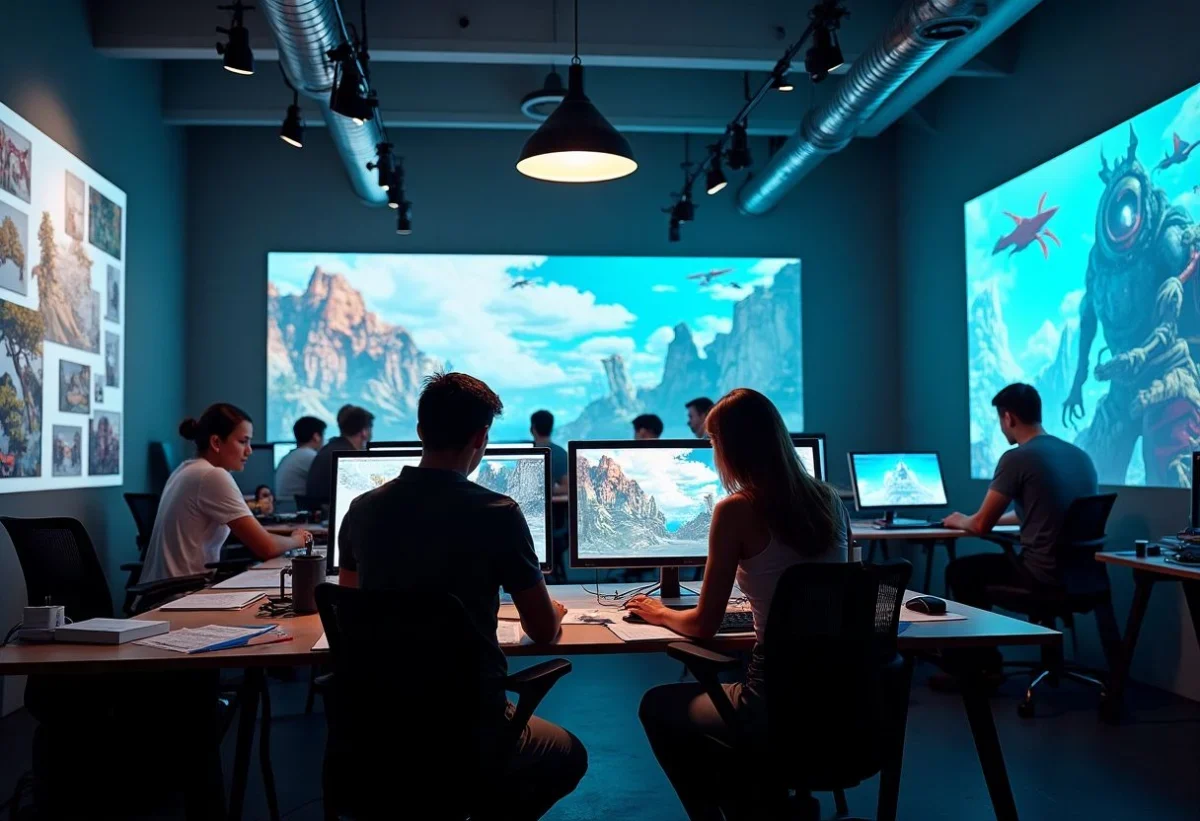
The world of video games is a constantly evolving universe, vibrant with technological innovations and limitless creativity. Becoming a game designer means participating in the creation of these immersive worlds, bringing captivating stories to life, and designing interactive experiences that leave a lasting impression. The path to this exciting profession is not linear; it is filled with numerous academic and professional possibilities. Committing to this journey requires a skillful blend of technical skills, artistic abilities, and a deep understanding of game mechanics. What are the academic pathways that lead to this profession?
University Programs in Game Design
Universities and higher education institutions offer various academic pathways to acquire the skills needed to become a game designer. These programs provide a solid and diverse foundation, essential for breaking into the video game industry.
University programs in game design often focus on learning the fundamental principles of game design. These curricula include modules on programming, graphic design, as well as the study of game theory. The combination of these disciplines allows students to understand the technical and creative aspects of video game creation.
In France, several prestigious institutions offer specialized training in game design. Among them, the University of Montpellier and the University of Paris stand out for their innovative programs. These institutions provide students with the opportunity to acquire practical skills through concrete projects while benefiting from a network of industry professionals.
Specialized Schools in Video Games
In addition to universities, specialized schools in video games represent another pathway for those wishing to embark on game design. These institutions focus on developing specific skills tailored to the market.
- ISART Digital: This Parisian school is recognized for its practical approach and its ability to prepare students to enter the industry directly. The program includes internships, allowing future game designers to apply their knowledge in a real professional context.
- Supinfogame Rubika: Located in Valenciennes, this school offers a curriculum focused on game design and development, in collaboration with industry partners. Students benefit from a dynamic learning environment and cutting-edge resources.
- Gobelins: Primarily known for its training in animation, this school also offers specialized modules in video game design. The emphasis is on innovation and creativity, essential skills to stand out in the field.
Joining a video game school provides the opportunity to focus on the practical and technical aspects of the profession while developing a strong portfolio that will serve as a calling card to potential employers.
Essential Skills for Success
Beyond degrees and training, certain skills are indispensable for succeeding in the field of game design. These skills are often acquired through experience and self-learning, in addition to academic studies.
- Mastery of development tools: Knowledge of game engines like Unity or Unreal Engine is crucial. These tools allow game designers to bring their concepts to life by creating playable prototypes.
- Skills in storytelling: Knowing how to tell a captivating story is a major asset. Video games are often perceived as narrative media, capable of transporting players to fantastic worlds.
- Analytical thinking and problem-solving: The ability to analyze and improve game mechanics is critical. A good game designer must be able to resolve gameplay issues to ensure a smooth and engaging user experience.
Building a Professional Portfolio
A well-constructed portfolio is essential to impress potential employers and demonstrate one’s skills in game design. It should be a true reflection of the candidate’s creative and technical abilities.
To build an effective portfolio, it is recommended to participate in game jams, events where participants create a video game in a limited time. These experiences allow individuals to test their skills, meet other enthusiasts, and get noticed by industry professionals.
Including personal projects in the portfolio is also an excellent way to showcase creativity and the ability to work independently. Projects should be accompanied by clear descriptions of the role played in their realization and the challenges faced.