
Laser treatments have revolutionized the field of aesthetic dermatology for several decades. New technologies have enabled the treatment of a variety of skin issues, ranging from wrinkle reduction to tattoo removal. Recently, the emergence of picosecond lasers has generated considerable interest, promising not only faster results but also less pain compared to previous generations of nanosecond lasers. As these new machines flood dermatology practices, many wonder if they truly deliver on their promises regarding patient comfort and effectiveness.
Understanding Picosecond Laser Technology
The technology of picosecond lasers is based on the emission of ultra-short pulses, which distinguishes them from the nanosecond lasers used previously. But what makes these pulses so special and how do they work?
- First, the duration of the pulses is measured in picoseconds, which is one trillionth of a second. This exceptional speed allows the laser to target skin pigments more precisely and effectively.
- Next, this precision reduces the risk of damage to surrounding tissues, contributing to a faster healing process and less post-procedure pain.
- Furthermore, the energy concentrated in such short durations leads to the fragmentation of pigments into much smaller particles, facilitating their elimination by the immune system.
Implications for Pain and Patient Comfort
The question of pain is often crucial when patients consider laser treatments. With the introduction of picosecond lasers, what is the experience like on the treatment table?
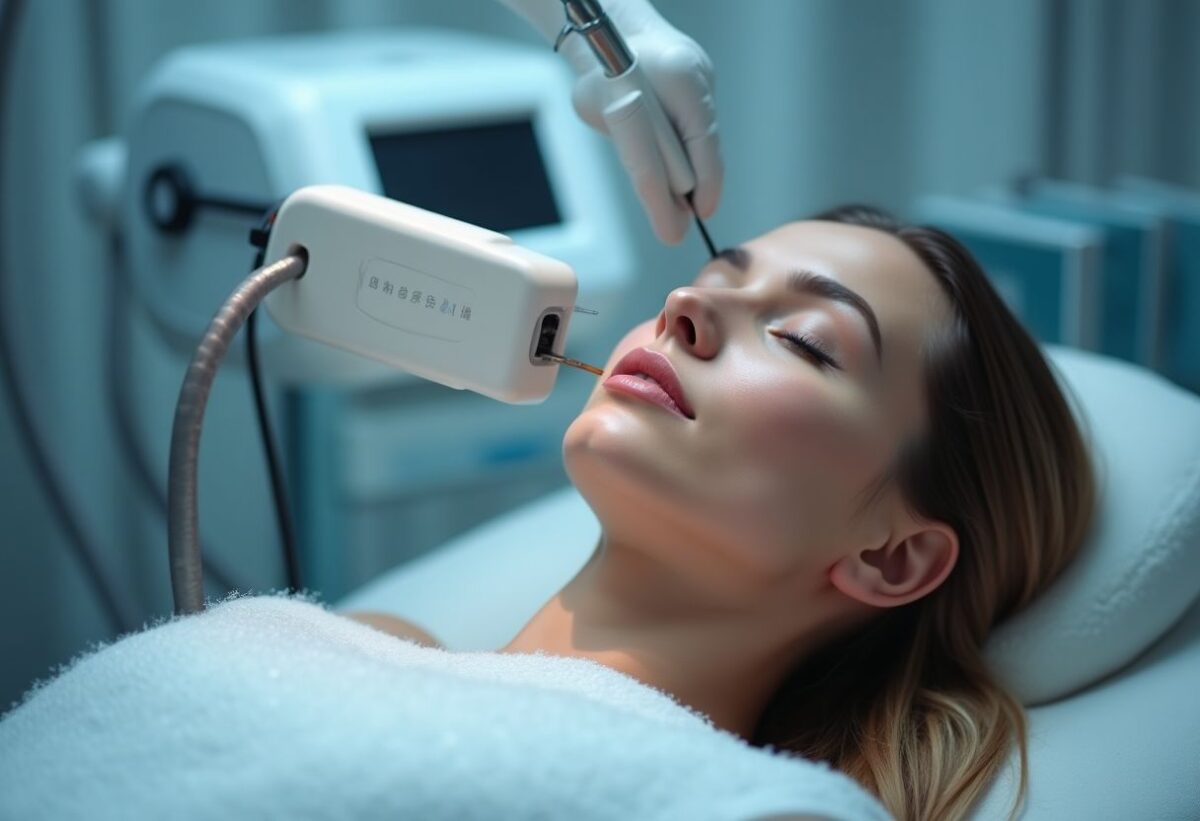
Compared to nanosecond lasers, picosecond lasers have been designed to optimize patient comfort. The ultra-short pulse duration results in less thermal buildup, reducing the burning sensation often associated with older laser treatments. Testimonials from patients who have experienced both types of treatment suggest a marked improvement in terms of perceived pain. Some report a sensation similar to a light elastic snap on the skin, which is considerably less painful than what they had previously experienced. This increased comfort could encourage more people to opt for laser treatments, knowing that discomfort is minimized.
Results and Effectiveness: A Radical Change?
Beyond pain, the effectiveness of laser treatments is a key consideration. Do picosecond lasers really offer superior results?
- First, clinical studies show that these lasers begin to show visible results after fewer sessions than nanosecond lasers.
- Next, the treatment of difficult pigments, such as resistant tattoo inks, has demonstrated a more significant and rapid reduction.
- Finally, this new technology has even become a major asset for tattoo removal in Rennes, a field where effectiveness is paramount.
Adaptability and Accessibility: Challenges to Overcome
Despite the apparent advantages, the widespread adoption of picosecond lasers still faces some obstacles. It is essential to understand these challenges to assess their potential impact on the industry.
The cost of picosecond lasers is a limiting factor. These devices represent a considerable investment for clinics, which can be reflected in the price of treatments for patients. Additionally, the training and expertise required to effectively use these machines are another barrier to their rapid adoption. Practitioners must acquire a thorough understanding of this technology to maximize its benefits while minimizing risks.
Finally, although initial results are promising, long-term studies are necessary to confirm the effectiveness and safety of picosecond lasers on various skin types and in different applications.
Picosecond lasers seem to embody a significant advancement in the field of laser treatments, promising less pain and faster results. While their cost and the need for additional training may slow their adoption, the appeal of a more comfortable and effective experience is undeniable.